Learning Areas
Science | HASS | Media Arts | Drama | Aboriginal and Torres Strait Islander Languages
In this unit
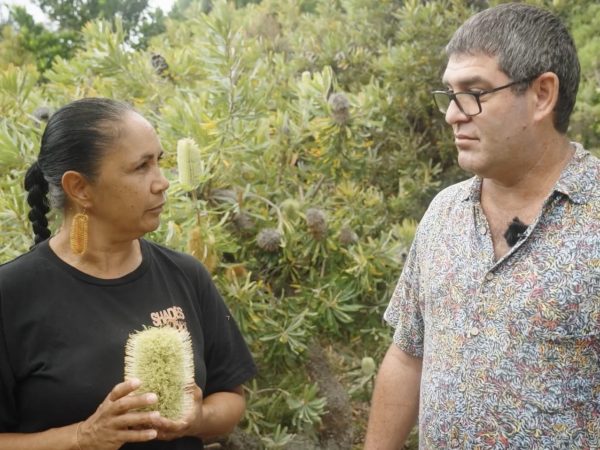
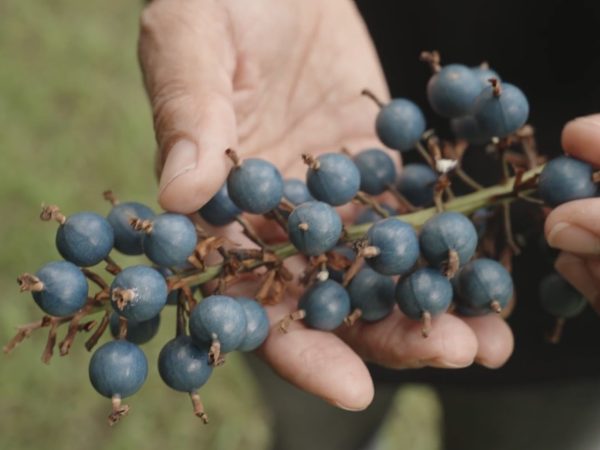
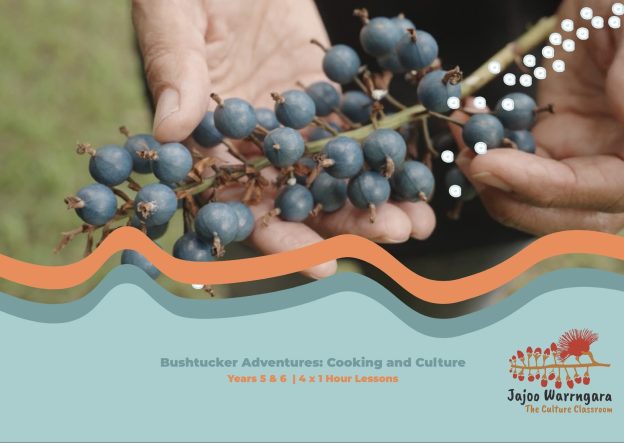
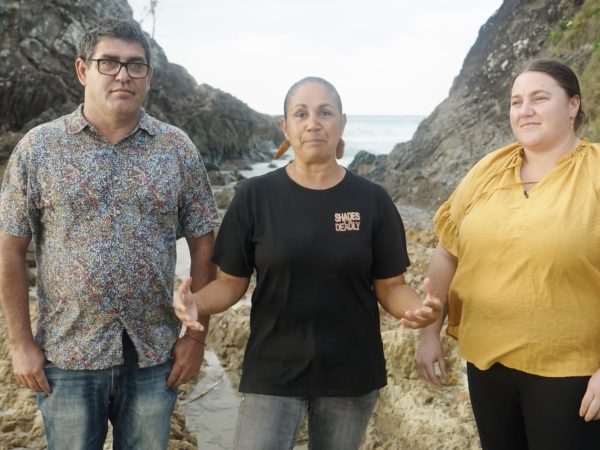
In this project based, multi-subject unit, students explore the deep connections between plants, food, culture, and Country. They will research native plants, create their own small bush tucker garden and learn about sustainable harvesting.Students bring their learning to life by scripting, filming, and presenting a "cooking and gardening show," using creativity and performance to share their knowledge in a fun and meaningful way.
This unit includes:
Learning Areas
- AC9S5U01
Examine how particular structural features and behaviours of living things enable their survival in specific habitats - AC9S5H02
Investigate how scientific knowledge is used by individuals and communities to identify problems, consider responses and make decisions - AC9S5I06
Write and create texts to communicate ideas and findings for specific purposes and audiences, including selection of language features, using digital tools as appropriate - AC9S6H02
Investigate how scientific knowledge is used by individuals and communities to identify problems, consider responses and make decisions - AC9S6I01
Pose investigable questions to identify patterns and test relationships and make reasoned predictions - AC9S6U01
Investigate the physical conditions of a habitat and analyse how the growth and survival of living things is affected by changing physical conditions
- AC9S6U01
Investigate the physical conditions of a habitat and analyse how the growth and survival of living things is affected by changing physical conditions - AC9HS6S01
Develop questions to investigate people, events, developments, places and systems - AC9HS6S02
Locate, collect and organise information and data from primary and secondary sources in a range of formats - AC9HS6S03
Evaluate information and data in a range of formats to identify and describe patterns and trends, or to infer relationships - AC9HS6S04
Evaluate primary and secondary sources to determine origin, purpose and perspectives - AC9HS6S06
Propose actions or responses to issues or challenges and use criteria to assess the possible effects - AC9HS6S07
Present descriptions and explanations, drawing ideas, findings and viewpoints from sources, and using relevant terms and conventions
- AC9LRF6C02
Participate in activities that involve planning and negotiating with others, using language that expresses information, preferences and ideas - AC9LRF6C05
Create and present a range of informative and imaginative spoken, written and multimodal texts, using a variety of modelled sentence structures to sequence information and ideas, and conventions appropriate to text type
- AC9ADR6E01
Explore ways that the elements of drama are combined to communicate ideas, perspectives and/or meaning in drama across, cultures, times, places and/or other contexts - AC9ADR6E02
Explore the ways that First Nations Australians use drama to continue and revitalise cultures - AC9ADR6D01
Explore ways to combine the elements of drama to communicate ideas, perspectives and/or meaning in improvisations, devised drama and/or scripted drama - AC9ADR6C01
Develop characters and situations, and shape and sustain dramatic action to communicate ideas, perspectives and/or meaning in improvised, devised and/or scripted forms - AC9ADR6P01
Rehearse and perform improvised, devised and/or scripted drama in informal and/or formal settings
- AC9AMA6E02
Explore ways First Nations Australians use media arts to continue and revitalise cultures - AC9AMA6D01
Develop media production skills to communicate ideas, perspectives and/or meaning through manipulation of media languages, including images, sounds, texts and/or interactive elements, and media technologies - AC9AMA6C01
Use media languages, media technologies and production processes to construct media arts works that communicate ideas, perspectives and/or meaning for specific audiences - AC9AMA6P01
Present media arts works in informal and/or formal settings using responsible media practice
Cross Curriculum Priorities
Aboriginal and Torres Strait Islander Histories and Cultures
- A_TSICP1
First Nations communities of Australia maintain a deep connection to, and responsibility for, Country/Place and have holistic values and belief systems that are connected to the land, sea, sky and waterways. - A_TSICP2
The occupation and colonisation of Australia by the British, under the now overturned doctrine of terra nullius, were experienced by First Nations Australians as an invasion that denied their occupation of, and connection to, Country/Place. - A_TSICP3
The First Peoples of Australia are the Traditional Owners of Country/Place, protected in Australian Law by the Native Title Act 1993 which recognises pre-existing sovereignty, continuing systems of law and customs, and connection to Country/Place. This recognised legal right provides for economic sustainability and a voice into the development and management of Country/Place.
- A_TSIC1
First Nations Australian societies are diverse and have distinct cultural expressions such as language, customs and beliefs. As First Nations Peoples of Australia, they have the right to maintain, control, protect and develop their cultural expressions, while also maintaining the right to control, protect and develop culture as First Nations Cultural and Intellectual Property. - A_TSIC2
First Nations Australians’ ways of life reflect unique ways of being, knowing, thinking and doing. - A_TSIC3
The First Peoples of Australia (Aboriginal Peoples) belong to the world’s oldest continuous cultures. First Nations Australians demonstrate resilience in the maintenance, practice and revitalisation of culture despite the many historic and enduring impacts of colonisation, and continue to celebrate and share the past, present and future manifestations of their cultures.
- A_TSIP2
First Nations Australians have sophisticated political, economic and social organisation systems, which include family and kinship structures, laws, traditions, customs, land tenure systems, and protocols for strong governance and authority. - A_TSIP3
The significant and ongoing contributions of First Nations Australians and their histories and cultures are acknowledged locally, nationally and globally.
Sustainability
- SS1
All life forms, including human life, are connected through Earth’s systems (geosphere, biosphere, hydrosphere and atmosphere) on which they depend for their wellbeing and survival. - SS2
Sustainable patterns of living require the responsible use of resources, maintenance of clean air, water and soils, and preservation or restoration of healthy environments.
- SW1
World views that recognise the interdependence of Earth’s systems, and value diversity, equity and social justice, are essential for achieving sustainability. - SW2
World views are formed by experiences at personal, local, national and global levels, and are linked to individual, community, business and political actions for sustainability.
- SD1
Sustainably designed products, environments and services aim to minimise the impact on or restore the quality and diversity of environmental, social and economic systems. - SD2
Creative and innovative design is integral to the identification of new ways of sustainable living. - SD3
Sustainable design requires an awareness of place, past practices, research and technological developments, and balanced judgements based on projected environmental, social and economic impacts.
Related Units
Unit Content